Healthy Snacks, Hidden Acid: Protecting Marin Kids' Enamel

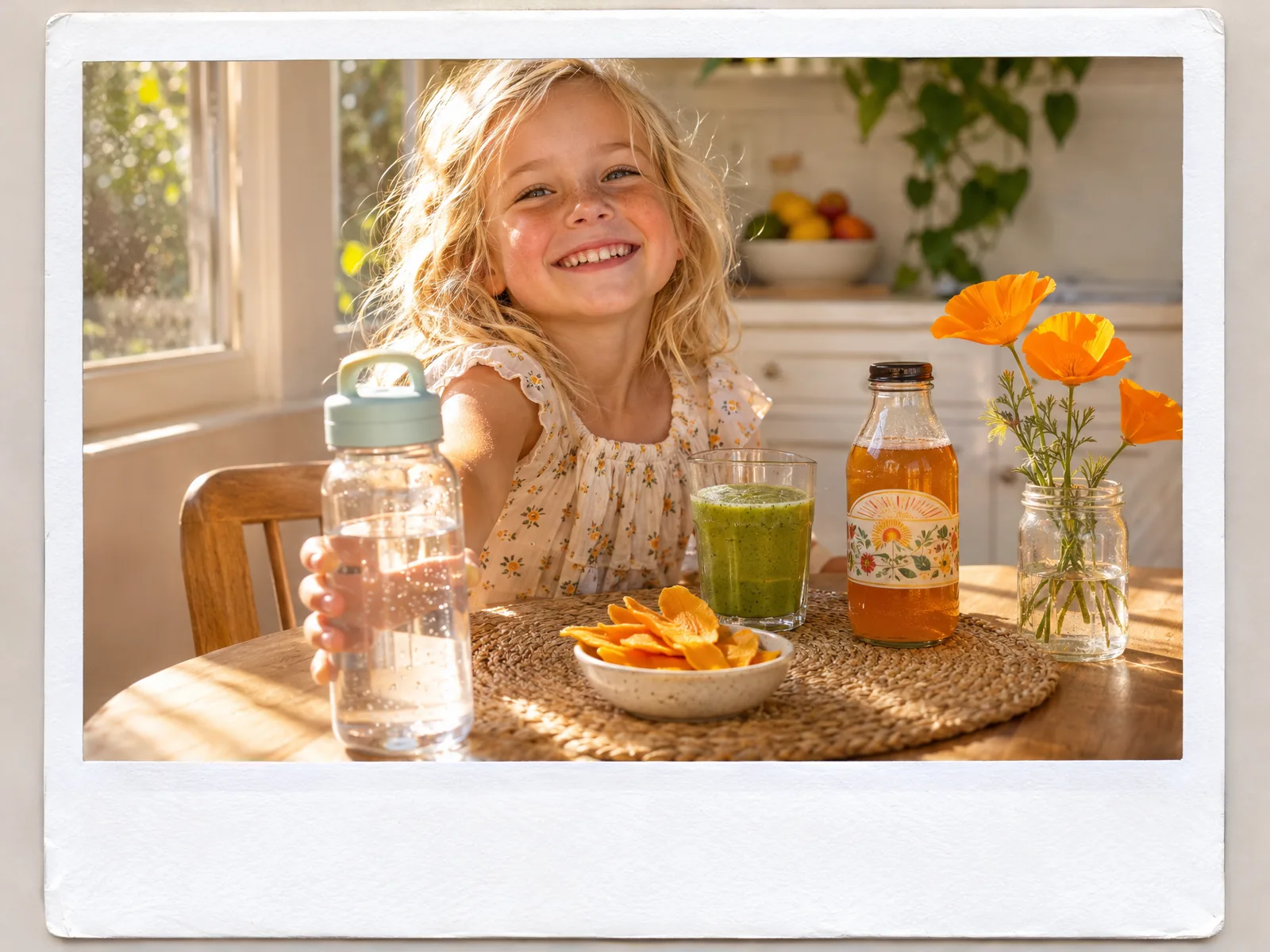
Ever packed your child's lunch with a kombucha, a handful of dried mango, and a green smoothie, and felt like a parenting superstar? I see those lunchboxes every week here in Novato, and I love that Marin families care so deeply about what their kids eat. But here is a little tooth truth that surprises almost every parent I meet: some of our most beloved "health" foods are quietly tough on children's enamel.
At Poppy Kids Pediatric Dentistry, we are wholeheartedly for wellness, so this is not about fear or guilt. It is about one gap nobody warns parents about: what your child's teeth go through when a "good for you" snack is also "high in acid."
Why acid, not just sugar, matters
Most of us grew up hearing that sugar causes cavities, and that is true. Cavities (dental caries) form when mouth bacteria feed on sugars and release acid that dissolves enamel. But there is a second, quieter path to trouble: the acid already in the food or drink itself.
Enamel, the hard outer shell of a tooth, begins to dissolve when the pH in the mouth drops below about 5.5. (pH measures acidity; the lower the number, the more acidic.) Dentists call this dental erosion. Here is the part that matters most: unlike skin or bone, tooth enamel does not grow back, and the same is true of the permanent teeth that come in later. What wears away is gone for good, so a little erosion each day adds up over the years.
The sneaky "health" foods
None of these are "bad." Kombucha and many bottled drinks are acidic enough to soften enamel directly, while dried fruit works differently, mostly through sugar that clings to teeth.
Kombucha. This fizzy, gut-friendly favorite, sold all over Marin, often tests at a pH of about 2.5 to 3.5, roughly as acidic as soda. Delicious, but not for sipping all afternoon.
Dried fruit. Here the main concern is sugar, not direct acid. Mango, apricots, raisins, and fruit leather pack concentrated sugar into a sticky form that clings to the grooves of teeth and lingers there, feeding the bacteria that make acid long after the snack is gone. Fresh fruit is a friendlier, less sticky choice.
Green smoothies, juices, and flavored waters. Many of these are acidic, and the real issue is how long they stay on teeth. In one large analysis in the Journal of the American Dental Association, researchers tested 379 commercially available beverages and found 93% had a pH below 4.0, many in the "extremely erosive" range. Not every drink falls there, and a smoothie made from whole fruit is not the same as juice: it keeps the fruit's fiber, which juice strips away. What to watch is prolonged sipping, especially when a recipe leans on acidic fruit or added juice.
It is less about what and more about how often
Here is the reassuring twist: the culprit usually is not the occasional kombucha or bag of raisins. It is frequency. Each time your child sips or nibbles something acidic or sugary, the mouth can dip into that enamel-softening zone and then needs time to recover. The American Academy of Pediatric Dentistry counts more than three between-meal sugar or acid exposures a day as a real cavity-risk factor. An all-day water bottle of smoothie, or dried fruit grazed all afternoon, keeps teeth under that stress for hours.
Small, doable swaps that protect enamel
You do not have to banish a single food. A few easy habits make a big difference:
- Make water the default sip. Keep acidic drinks to mealtimes and let water be the all-day go-to. (Novato's tap water is not fluoridated, so ask us about fluoride at your child's next visit.)
- Contain it to mealtimes. Served with a meal rather than grazed across the afternoon, acidic or sweet foods give saliva a chance to neutralize acid and rinse teeth clean.
- Rinse, then wait to brush. Have your child swish with plain water after an acidic snack. Counterintuitively, do not brush right away. Softened enamel is more vulnerable, so wait about an hour.
- Pair and sip smart. Cheese, plain yogurt, and other dairy help neutralize acid, and a straw helps acidic drinks bypass the front teeth.
Pack this instead
Think everyday swaps, not a list of forbidden foods. These lean on the ADA's guidance to favor fruit, vegetables, cheese, and water, and on pediatric advice to choose whole fruit over juice (MouthHealthy).
| Instead of… | Offer these options |
|---|---|
| Kombucha | Plain water to drink; plain yogurt with live cultures if the goal is probiotics |
| Dried mango, apricots, or raisins | Fresh mango, ripe pear slices, melon, or banana |
| Fruit leather or fruit snacks | Fresh fruit paired with cheese |
| Juice or juice boxes | Water plus a serving of whole fruit |
| A green smoothie sipped all day | Whole fruit and vegetables with plain yogurt; if you serve a smoothie, offer it with a meal and finish it in one sitting |
| Sweetened or flavored waters | Plain still water; plain milk with meals, when age-appropriate |
A few of my favorite lunchbox combinations:
- Fresh mango and cheese
- Pear slices and plain yogurt
- Melon and cottage cheese
- Cucumber and hummus
- Banana and a thin spread of unsweetened nut or seed butter
- Water alongside any of the above
Prepare everything for your child's age and chewing ability, follow your school's allergy policies, and keep perishable foods cold.
We are here to help
A quick professional checkup can catch early enamel wear long before it becomes a problem. Our preventive services include fluoride treatments that strengthen enamel against exactly this kind of acid, and if your little one has not been in yet, here is what to expect at a first visit. For families without dental insurance, our membership plan keeps those regular checkups easy and predictable.
Please remember this is general guidance, not a diagnosis. For advice specific to your child, check with your pediatrician and with me at your next visit. And if kombucha and dried mango have been daily lunchbox staples, do not worry: it is never too late to make small changes that add up for your child's smile. Keep nourishing those growing bodies, and we will help you protect the enamel while you do.
— Dr. Andrea